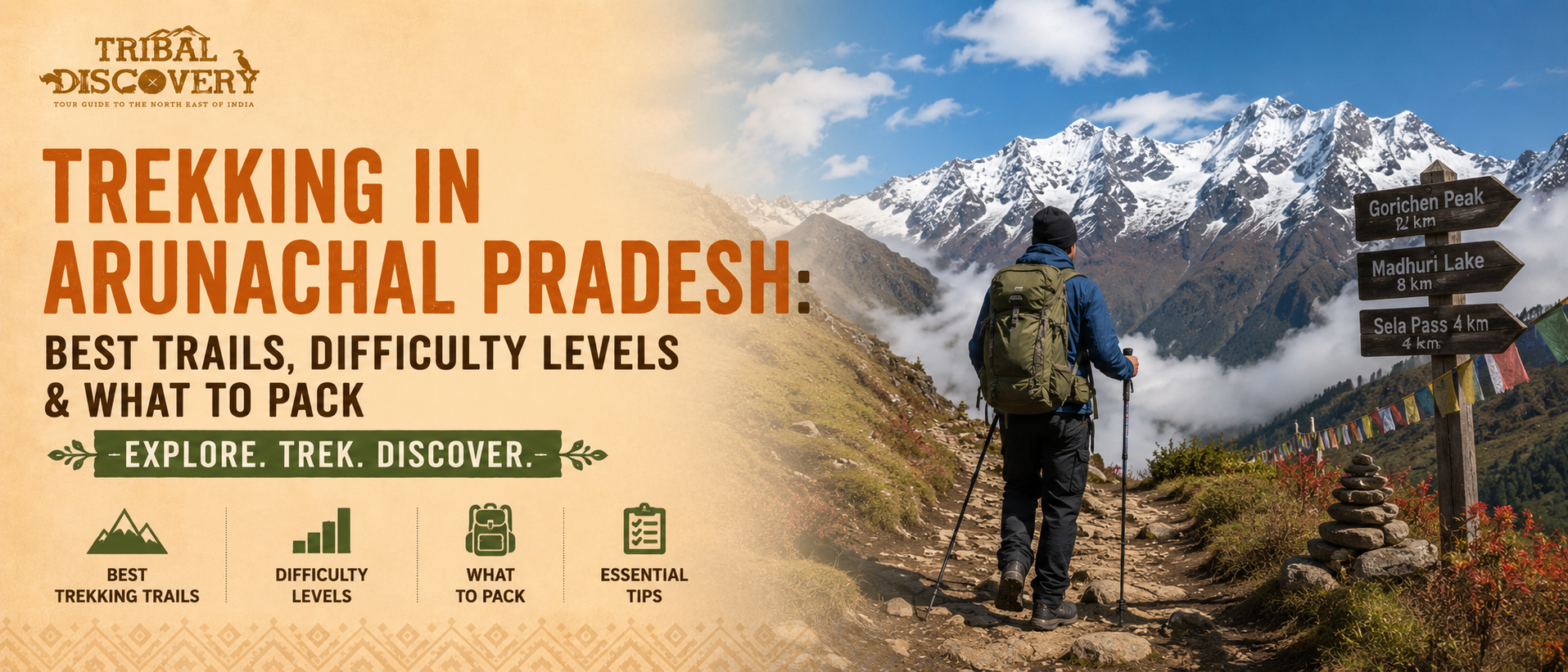
Arunachal Pradesh translates to the Land of Dawn-lit Mountains, and anyone who has trekked here will tell you that name is not poetic exaggeration. It is a precise description. The state sits at the junction of the Eastern Himalayas, the Mishmi Hills, and the Patkai Range, creating a trekking landscape of extraordinary diversity, from dense subtropical forests at lower elevations to glacial lakes, high-altitude meadows, and remote border passes above 15,000 feet.
Despite all of this, Arunachal Pradesh remains one of India's least-explored trekking destinations, which is precisely what makes it so compelling. Trails here carry far fewer footprints than those in Himachal or Uttarakhand, wildlife encounters are genuine rather than staged, and the cultural immersion available along most routes is something no other Himalayan state can match.
This guide covers the best trails, their difficulty levels, the best time to trek, permit requirements, and a comprehensive packing list to help you prepare properly.
Why Trek in Arunachal Pradesh?
From lush forests to sweeping mountain views, the trails in Arunachal Pradesh are relatively untouched, making the journey just as magical as the destination. The state is also the Orchid State of India, harboring an extraordinary range of biodiversity along every trail, from red pandas in the Talle Valley to clouded leopards in the lower forests. For trekkers who want adventure, cultural depth, and genuine wilderness in a single journey, Arunachal is without equal in the Northeast.
Permits for Trekking in Arunachal Pradesh
Every Indian citizen requires an Inner Line Permit (ILP) to enter Arunachal Pradesh for trekking or any other purpose. The permit is applied for online at eilp.arunachal.gov.in and is typically processed within 24 hours. Foreign nationals require a Protected Area Permit (PAP) through the Foreigners Regional Registration Office.
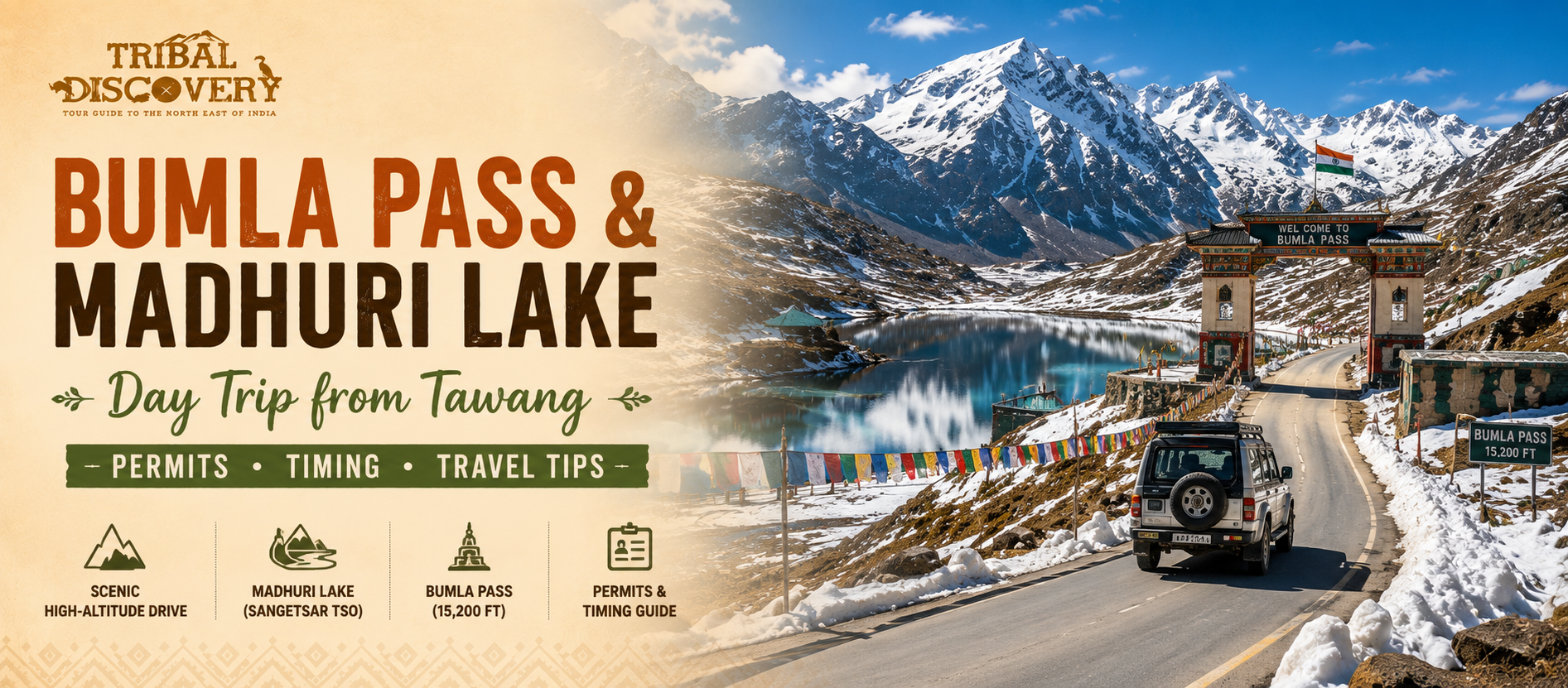
For treks to border-adjacent areas such as Bum La Pass near Tawang or routes in the Anjaw district near the Myanmar border, additional special permits are required. These are arranged through the local Deputy Commissioner's office or through a registered tour operator. Always confirm permit requirements for your specific trail before finalizing your itinerary.
Best Trekking Trails in Arunachal Pradesh
1. Talle Valley Trek (Ziro Valley)
Difficulty: Easy to Moderate
Duration: 4 to 6 days
Best Season: March to May, September to November
The Talley Valley Trek takes you to the wildlife sanctuary located 32 kilometres from Ziro, traversing through bamboo forests, famous rainforests, lush green mountain hills, and river streams while offering a medley of culture and tribal traditions exclusive to Arunachal Pradesh.
This is one of the most beginner-friendly treks in the state and an ideal first Arunachal experience. The trail passes through the Apatani tribal heartland of Ziro Valley before climbing into the Talle Valley Wildlife Sanctuary, a biodiversity hotspot that rewards patient walkers with sightings of rare birds, orchids, and primates. If you visit in late September, the Ziro Music Festival coincides beautifully with this trek for a dual cultural and adventure experience.
2. Sela Pass Trek (Tawang Region)
Difficulty: Moderate
Duration: 3 to 5 days
Best Season: April to June, October to November
The Sela Pass trek provides panoramic views of the Eastern Himalayas and takes trekkers through alpine meadows and pristine lakes, with spiritual significance as a gateway to Tawang.
At 13,700 feet, Sela Pass is one of the most dramatic high-altitude passes accessible to trekkers of moderate fitness. The trek from Dirang to Sela and onward to Tawang follows sections of the historic Bailey Trail and offers some of the clearest views of the Eastern Himalayan range available on any Northeast Indian trail. The frozen Sela Lake at the pass is a visual highlight regardless of season.
3. Bailey's Trek (Dirang to Jang Section)
Difficulty: Moderate to Difficult
Duration: 7 to 14 days (various sections available)
Best Season: April to June, October to November
The Bailey Trail is one of the most popular trekking trails in Arunachal Pradesh, journeying along multiple valleys formed by the Himalayas with the highest point at Sela Pass at 4,983 meters, offering magnificent views throughout the trek.
Named after Frederick Marshman Bailey, a British political officer who surveyed this route in the early 20th century, the Bailey Trail is one of the most legendary long-distance routes in Northeast India. Trekkers can choose sections based on their fitness level and available time. The Dirang to Jang section is among the most scenic, combining high-altitude passes with remote village encounters and river valley walking. The Bailey Trek Dirang to Jang Section 2 has the most elevation gain of all trails in the area, with an ascent of 13,090 feet.
4. Mechuka Valley Trek (West Siang)
Difficulty: Difficult
Duration: 8 to 12 days
Best Season: March to May, September to October
The Mechuka Trek will take you through tough and exhausting trails and is best experienced from September to October or February to March for the best conditions, requiring extreme fitness from participants.
Mechuka is one of the most remote and visually spectacular valleys in all of Arunachal Pradesh, situated near the Indo-China border in West Siang district. The trek passes through dense forests with diverse flora and fauna, past monasteries built on hilltops, and through communities of Adi and Memba tribal groups who have had minimal contact with mainstream tourism. This is a trek for experienced, well-prepared trekkers only.
5. Gorichen Base Camp Trek
Difficulty: Very Difficult (Experienced Trekkers Only)
Duration: 14 to 18 days
Best Season: September to April
The Gorichen Base Camp Trek is one of the most challenging treks in Arunachal Pradesh, taking trekkers to the base camp of Mount Gorichen, the highest peak in the state, passing through high-altitude passes and offering stunning Himalayan views.
Gorichen Peak sits at 22,500 feet above sea level and is considered a sacred place by locals, originally named Sa-Nga Phu, meaning Kingdom of Deity. This trek is reserved for highly experienced high-altitude trekkers with prior expedition experience. Full mountaineering preparation, proper acclimatization protocols, and an experienced guide are non-negotiable requirements.
6. Seven Lakes Trek (Dibang Valley)
Difficulty: Moderate to Difficult
Duration: 3 to 6 days
Best Season: March to June
The Seven Lake Trek covers seven breathtakingly beautiful high-altitude lakes concealed in the stunning hills of the Anini region, reaching an elevation of almost 4,000 meters into the glaciers of the Dibang Valley District.
This is one of the most visually arresting and least-visited treks in Arunachal Pradesh. The trail starts from Anini, the district headquarters of Dibang Valley, and winds through steep forested terrain to reach a cluster of glacial lakes that sit within a hidden valley surrounded by the Mishmi Hills. The biodiversity here is exceptional, with the trail running close to the Dibang Wildlife Sanctuary.
Best Time to Trek in Arunachal Pradesh
Spring in Arunachal Pradesh brings mild and pleasant weather, with forests and valleys bursting into bloom with wildflowers, making it a great time for first-time trekkers with temperatures ranging from 15°C to 25°C.
Autumn is one of the best times to visit Arunachal Pradesh for trekking, with post-monsoon clear skies, fresh green landscapes, crystal-clear mountain views, and comfortable trekking conditions.
The monsoon season brings heavy rainfall, slippery trails, frequent landslides, and road closures, making trekking during this season not recommended due to high risk and unpredictability.
In summary, October through May is the reliable trekking window. April to June and October to November are the two peak windows for most trails.
What to Pack for Trekking in Arunachal Pradesh
Getting your packing right separates a rewarding expedition from a miserable one. Here is a complete, practical packing list.
Clothing and Layering:
Moisture-wicking base layer tops and bottoms form the foundation of your clothing system. Add a mid-layer fleece or down jacket for warmth at altitude and camp. A waterproof and windproof outer shell is non-negotiable since mountain weather can change within minutes. Pack trekking trousers that are quick-drying, at least two pairs of moisture-wicking trekking socks per day of trekking, a warm woollen hat, lightweight gloves, a buff or balaclava for high passes, and a sun hat for lower elevation sections.
Footwear:
Waterproof, ankle-supporting trekking boots are essential. Break them in thoroughly before the trek. Pack one pair of lightweight camp shoes or sandals for evenings. Gaiters are useful for muddy post-monsoon trails.
Trekking Gear:
A 45- to 60-liter backpack with a waterproof cover carries everything you need. Trekking poles significantly reduce knee strain on steep descents and are especially useful at high altitude. A lightweight sleeping bag rated to at least minus 10°C is necessary for high-altitude camps. A trekking tent or confirmation of camp accommodation should be sorted in advance through your guide or operator.
Navigation and Safety:
Download offline maps of your trail on apps like Maps.me or AllTrails before departure. Carry a torch with spare batteries, a whistle, and a small personal locator beacon for remote trails. A satellite communicator is advisable for Gorichen, Seven Lakes, and Mechuka treks where mobile connectivity is completely absent.
Medical and Altitude Kit:
A comprehensive first-aid kit should include Diamox (acetazolamide) for altitude sickness prevention, ibuprofen, antihistamines, antiseptic cream and bandages, blister pads, rehydration sachets, and any personal prescription medication. Consult a physician before taking Diamox. A pulse oximeter to monitor blood oxygen levels is a worthwhile addition for treks above 3,500 meters.
Documents and Essentials:
Carry your original ID, multiple printed copies of your ILP and any additional permits, emergency contact information, a portable power bank, a solar charger for longer expeditions, sunscreen SPF 50 and above, UV-blocking sunglasses, and a lightweight travel towel.
Essential Trekking Tips for Arunachal Pradesh
Always hire a local guide, especially for remote trails like Mechuka and the Seven Lakes. Hiring a guide is advisable, particularly for first-time trekkers in Arunachal Pradesh, as guides can help navigate trails safely and provide information about the local area. Acclimatize before attempting high-altitude sections by spending at least one to two nights at an intermediate altitude. Start each day early to make the most of stable morning weather before afternoon cloud build-up. Inform your accommodation or a trusted local contact of your daily plan and expected return time. Never push through signs of altitude sickness. The only correct response is to descend immediately.
Frequently Asked Questions
Q1. Do I need a permit to trek in Arunachal Pradesh?
Yes. All Indian nationals require an Inner Line Permit, available online at eilp.arunachal.gov.in. Foreign nationals require a Protected Area Permit through the FRRO. Border-adjacent treks require additional special permits arranged through the local DC office.
Q2. What is the easiest trek in Arunachal Pradesh for beginners?
The Talle Valley Trek near Ziro is widely considered the most accessible trek for beginners, offering a moderate trail through beautiful forests and tribal landscapes without extreme altitude challenges.
Q3. What is the most challenging trek in Arunachal Pradesh?
The Gorichen Base Camp Trek is the most demanding, involving very high altitude, long duration, and technical terrain. It is recommended only for experienced high-altitude trekkers with prior expedition background.
Q4. Is Arunachal Pradesh safe for solo trekking?
Arunachal Pradesh is generally safe, but solo trekking on remote trails is strongly discouraged. Hiring a local guide is essential for navigation, cultural sensitivity, and emergency safety on most trails beyond the Ziro Valley.
Q5. What is the best month to trek in Arunachal Pradesh?
The best time to trek in Arunachal Pradesh is during the cooler months from October to March when the weather is pleasant. April to June also offers excellent trekking conditions with spring blooms and stable weather.
Q6. Can I see wildlife while trekking in Arunachal Pradesh?
Yes. Trekking through areas like Talle Valley Wildlife Sanctuary and Dibang Valley offers genuine opportunities to spot red pandas, barking deer, hornbills, and a vast range of endemic bird species. Clouded leopards and Asiatic black bears inhabit forested stretches of several trails.
Q7. How physically fit do I need to be for Arunachal Pradesh trekking?
For easy to moderate trails like Talle Valley or sections of the Sela Pass Trek, a basic level of cardiovascular fitness and regular walking practice is sufficient. For Mechuka, Bailey's Trail, and Gorichen, you should be regularly active, comfortable with steep terrain, and have prior trekking experience at altitude.
Trek Arunachal Pradesh with Tribal Discovery Tours
Arunachal Pradesh rewards those who arrive prepared and connected. At Tribal Discovery Tours, we design trekking journeys across the state's most extraordinary trails, with full local guide support, permit assistance, acclimatization planning, and culturally immersive village stays built into every itinerary. We combine adventure with authentic community connections, giving you not just a physical journey but a genuinely transformative one.
Whether you want a gentle introduction through Ziro Valley or a challenging high-altitude expedition to Gorichen base camp, we build the trek around your experience level and travel goals.
Explore Our Arunachal Pradesh Trekking Packages
The dawn-lit mountains are calling. Lace up your boots and answer.