Tawang, nestled high in the Arunachal Pradesh mountains, transforms dramatically with the seasons. Deciding between Tawang in winter versus summer depends on your preferences, comfort level, and travel goals. Winter offers pristine snow-covered landscapes and spiritual tranquility, while summer brings accessibility and adventure opportunities. This comparison guide helps you choose the perfect time for your Tawang visit. Located at 10,000 feet elevation, Tawang experiences extreme seasonal variations that significantly impact your travel experience. Understanding the differences between winter and summer in Tawang ensures you pack appropriately and plan activities that match seasonal conditions.
Tawang in Winter: Experience and Conditions
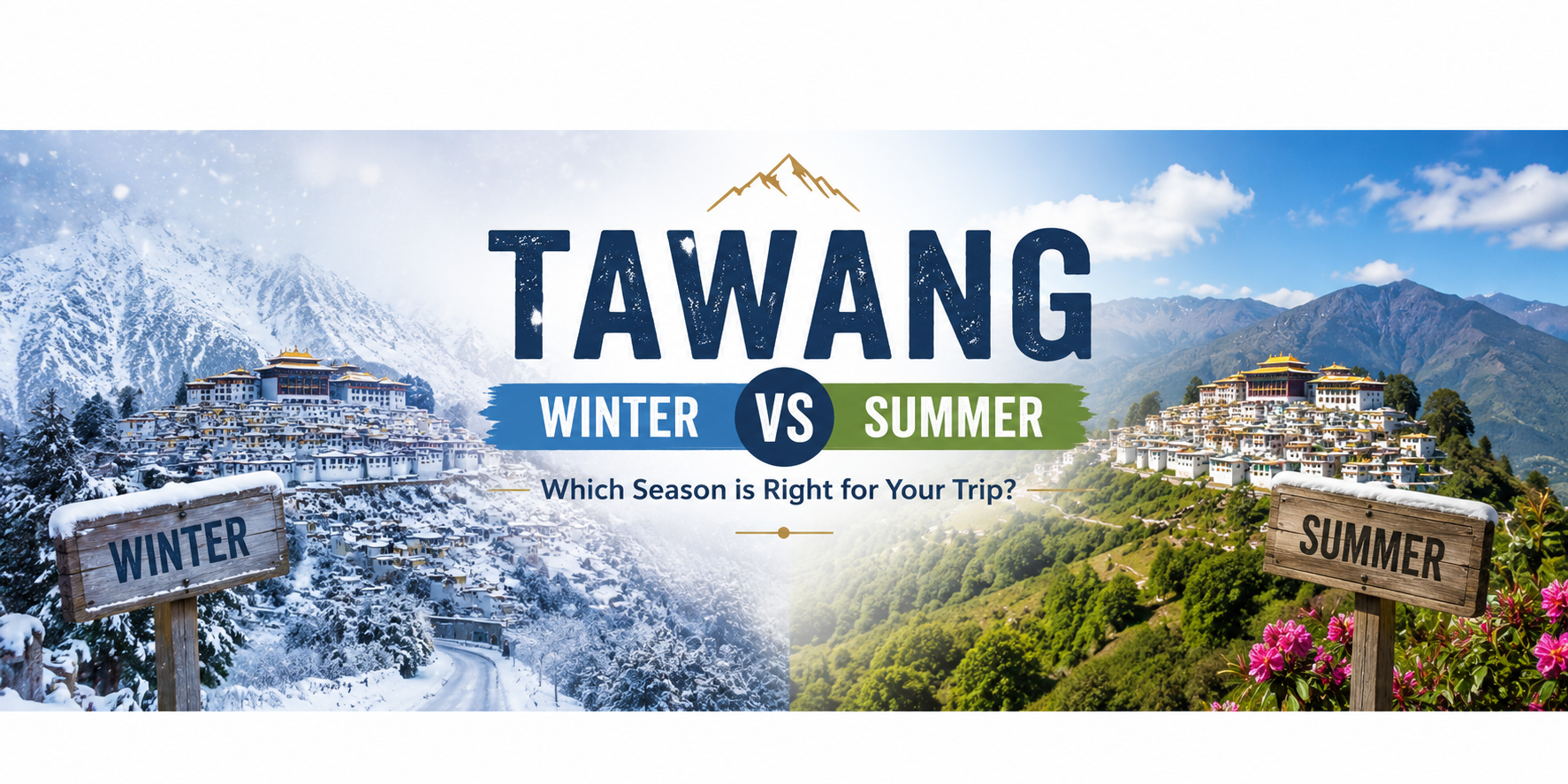
Winter in Tawang, from November through February, transforms the region into a snow-covered wonderland. Temperatures drop to minus 10 degrees Celsius to 5 degrees Celsius, creating breathtaking white landscapes. Heavy snowfall blankets the mountains, making roads treacherous and requiring specialized vehicles. The Tawang Monastery appears particularly mystical under snow, and the clear winter skies offer stunning visibility for photography.
Winter Advantages and Challenges
Winter attracts fewer tourists, providing an authentic, peaceful experience of Tawang's spiritual heritage. Accommodation prices drop significantly, and you'll find quieter monasteries for meditation. However, roads frequently close due to snowfall, transport becomes unpredictable, and many guesthouses operate limited services. Winter hiking becomes dangerous without proper equipment. Most visitors consider winter suitable only for experienced travelers comfortable with extreme conditions and isolation.
Tawang in Summer: Peak Season Experiences
Summer in Tawang, from April through September, brings mild temperatures ranging from 10 to 20 degrees Celsius. Roads remain accessible, skies stay mostly clear, and the landscape transforms with blooming rhododendrons and alpine flowers. This season offers reliable weather for trekking, sightseeing, and adventure activities. The Tawang Monastery vibrates with festival energy, and local markets bustle with activity.
Summer Advantages and Drawbacks
Summer is ideal for families, first-time visitors, and adventure seekers. Hiking trails become accessible, vehicle transport runs smoothly, and accommodation options operate at full capacity. Tourist infrastructure, restaurants, and guides are readily available. The primary disadvantage is crowds. Peak season brings thousands of visitors, increasing accommodation costs by 50 to 100 percent and creating congestion at popular sites. Popular trails become crowded, diminishing the sense of solitude many seek in the mountains.
Weather Comparison: Winter vs Summer in Tawang
Winter weather in Tawang remains unpredictable and extreme. Heavy snowfall can occur suddenly, stranding travelers. Visibility drops during snowstorms, and frostbite becomes a real risk. Roads require four-wheel-drive vehicles, and some routes close entirely. Summer weather provides stability and predictability. Morning temperatures feel chilly, afternoons warm pleasantly, and evenings cool down for comfortable sleeping. Occasional rain occurs, but it doesn't disrupt travel plans significantly. The clear mountain air and bright sunshine make summer ideal for outdoor exploration and photography.
Seasonal Activity Opportunities
Winter activities include snowball fights, photography of snow-covered monasteries, and peaceful monastery visits for spiritual seekers. Limited hiking options exist due to snow coverage. Summer opens endless possibilities: high-altitude trekking to Sela Pass, Nuranang Falls exploration, Bomdila town visits, and Madhuri Lake trekking. Adventure sports like camping and adventure tours operate exclusively in summer months.
Cost and Crowd Considerations
Winter travel in Tawang costs considerably less. Budget accommodation drops to 500-800 rupees nightly compared to summer rates of 1500-3000 rupees. Restaurant meals cost less as competition decreases. However, winter requires expensive specialized gear, emergency supplies, and possibly hiring experienced guides familiar with snow conditions. Summer brings higher accommodation costs but lower equipment expenses. Your total winter and summer budgets may balance similarly despite different spending categories.
Tourist crowds peak from May through August. Tawang Monastery becomes congested, parking areas fill quickly, and popular restaurants have long waits. December through February sees minimal tourists, providing solitude-seeking travelers authentic Tawang experiences. March and September serve as shoulder seasons with moderate crowds, pleasant weather, and reasonable prices.
Which Season is Right for You?
Choose winter if you're an experienced mountain traveler comfortable with extreme conditions, seeking spiritual solitude, or planning a photography expedition. Winter offers unmatched mystique and budget advantages for prepared travelers.
Choose summer if you're visiting with family, prefer reliable transportation, want diverse activities, or are experiencing high-altitude travel for the first time. Summer accommodates most travelers and provides the most rewarding experiences for typical visitors.
Frequently Asked Questions
Is Tawang accessible in winter?
Tawang remains accessible but unpredictably. Roads close frequently due to snowfall, and travel requires four-wheel drive vehicles. Most travelers find winter access frustratingly difficult and recommend summer visits unless you have flexible schedules and winter driving experience.
What's the best time to visit Tawang for trekking?
Summer months, particularly May through September, offer ideal trekking conditions. Weather remains stable, trails are snow-free, and visibility is excellent. Winter trekking requires mountaineering experience and specialized equipment.
How much more expensive is summer than winter in Tawang?
Summer accommodation costs 50 to 100 percent more than winter rates. However, winter requires expensive gear, specialized guides, and emergency supplies, making total costs comparable. Summer offers better value for average travelers.
Can I visit Tawang in monsoon season?
July and August experience heavy rainfall, causing landslides and road damage. Transportation becomes unreliable and flooding occurs frequently. Most travel operators close down during monsoon season, making summer visits best between May and June and in September.
What should I pack for Tawang in winter?
Pack extreme cold-weather gear: thermal layers, insulated jackets, wool gloves, snow boots, a balaclava, and sunglasses. Bring high-altitude sickness prevention medication and emergency supplies. Winter travel to Tawang requires significantly more preparation than summer visits.
Key Takeaways
- Winter Tawang offers spiritual solitude, snow-covered beauty, and budget pricing but requires extreme weather expertise and unpredictable road access
- Summer Tawang provides reliable weather, diverse activities, family-friendly accessibility, and consistent transportation despite higher costs and crowds
- Winter temperatures plunge to minus 10 degrees Celsius while summer ranges from 10 to 20 degrees Celsius with predictable conditions
- Summer trekking, hiking, and adventure activities operate fully; winter limits outdoor exploration to prepared mountaineers
- Consider your experience level, travel companions, budget flexibility, and activity preferences when choosing between Tawang's seasonal visits.