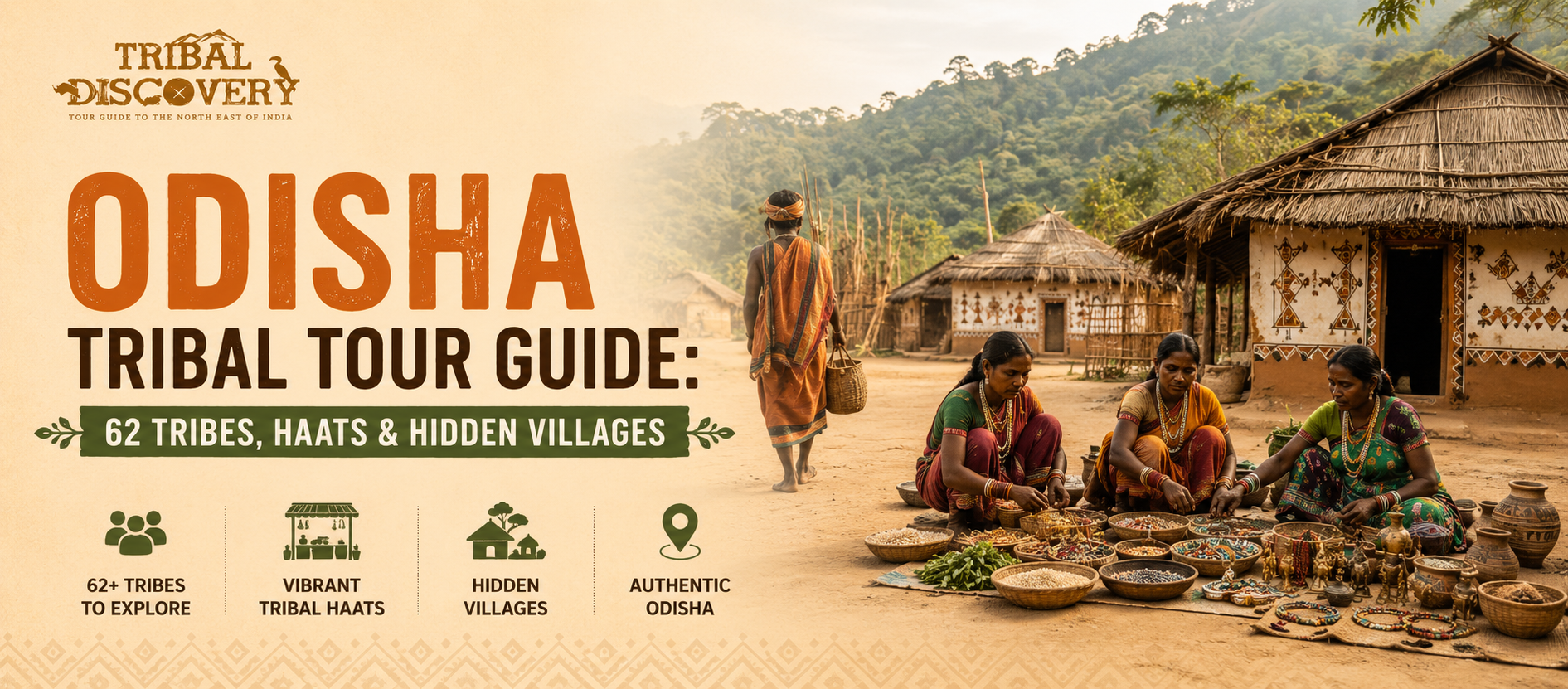
There are destinations in India that are beautiful, and then there are destinations that are genuinely transformative. Odisha belongs firmly in the second category. While its sun-carved temples and pristine coastline draw visitors from across the world, the state's true cultural depth lies in its southern and central highlands, where 62 tribal communities, each with their own unique culture and tradition, following ancient customs, art forms, and dialects, have maintained their way of life across millennia. This is not a living museum. This is living itself, unfiltered, unscripted, and extraordinary.
This complete guide takes you through who these communities are, where to find them, which weekly haats to visit, what hidden villages deserve your time, and everything you need to plan a respectful, immersive tribal tour of Odisha.
Why Odisha Is India's Most Important Tribal Destination
About 22 per cent of Odisha's entire population consists of tribal communities. No other Indian state offers this concentration of distinct indigenous cultures within a single geography. The southern districts of Koraput, Rayagada, Kandhamal, and Malkangiri form the core tribal belt, where rolling hills, dense forests, and terraced valleys create a landscape as dramatic as the cultures embedded within it.
A tribal tour here is not just sightseeing. You will witness centuries-old customs, listen to soulful tribal music, taste traditional food, and see handicrafts made by skilled artisans. For travellers who have seen the standard circuit of Indian tourism and are looking for something that reaches deeper, Odisha's tribal landscape is without parallel.
The Major Tribes of Odisha You Should Know
The Bonda Tribe
The Bonda people are one of India's most primitive tribes, known for their unique beaded attire and silver neck rings, maintaining a fierce and proud independence from the hills of Malkangiri. Bonda women are immediately recognisable by their layers of silver jewellery, bead necklaces covering the upper body, and a small strip of cloth around the waist. They descend from their hilltop villages only occasionally, most famously to attend the Onukudelli weekly market on Thursdays, making that haat one of the most extraordinary cultural encounters available to travellers anywhere in India.
The Dongria Kondh Tribe
The Dongria Kondh are known as the protectors of the hills, famous for their intricate hand-woven shawls and deep ecological wisdom, residing in the sacred Niyamgiri Hills. Their connection to the Niyamgiri Hills goes far beyond geography. They consider the hills a living deity, and their fight to protect the Niyamgiri from mining became internationally recognised. Visitors can learn about plants and medicinal herbs from the Dongria Kondh tribal communities and witness their vibrant traditional dress decorated with bright colours like yellow and red.
The Gadaba Tribe
The Gadaba tribes in the Jeypore area are popular for their unique Dhemsa dance, a dance form that has been passed down for generations. Near the majestic Duduma Waterfall, you can visit villages of the Olar Gadaba tribe, where older women wear huge metal necklaces that mark age, status, and community identity simultaneously.
The Kutia Kondh Tribe
The Kutia Kondh are a Dravidian-speaking tribe that is traditionally hunter-gatherer. Kutia women have tattooed faces, multiple nose rings, and earrings. Their villages in the Kandhamal district around Baliguda offer one of the most visually striking and culturally dense tribal encounters in all of Odisha.
The Saura Tribe
The Saura tribe maintains a distinct tradition of Saura painting combined with complex mythological associations in addition to their agricultural heritage. Saura wall paintings, locally called Ittal or Ekons, are intricate geometric murals painted on the interior walls of homes as offerings to deities, depicting animals, nature, and ancestral myths in a style that has attracted international art world attention.
The Paroja Tribe
The Paroja tribal community is known for wearing colourful traditional attire and unique traditional jewellery. Found primarily in the Koraput district, the Paroja are skilled weavers whose textile traditions have evolved over centuries alongside their agricultural way of life.
Key Districts and Hidden Villages to Explore
Koraput: The Gateway to Everything
Koraput is known as the Tribal Museum of the region, home to the Bonda and Gadaba tribes and featuring famous markets like the one at Onukudelli. Beyond the market, the Koraput district rewards slow travellers. The forested hills around Jeypore contain villages where daily life unfolds at a rhythm dictated by seasons and harvests rather than clocks and calendars. Deomali, the highest peak in Odisha at around 1,672 metres, sits within this district and offers a landscape context that makes the cultural depth of the region even more tangible.
Rayagada: Niyamgiri Hills and Dongria Kondh Territory
Rayagada offers a chance to learn about nature and sustainable practices through the Dongria Kondh and Desia Kondh tribes. The Chatikona haat on Wednesdays is the most reliable entry point, but travellers who venture further into the Niyamgiri Hills with a local guide encounter a way of life that feels genuinely untouched by the outside world. The Dongria Kondh's terrace farming system, carved into steep hillsides over generations, is a feat of indigenous agricultural engineering that deserves far more recognition than it receives.
Kandhamal: Kutia Kondh and Ancient Tattoo Traditions
Baliguda is located in Kandhamal and is famous for the Kutia Kondh tribe, who are popular for still following their ancient traditions and their unique tattoo culture. This district is considerably less visited than Koraput or Rayagada, which makes it especially rewarding for travellers seeking encounters that have not been shaped by years of tourist traffic. Homestays in and around Phulbani, the district headquarters, provide a comfortable base for exploring surrounding Kutia Kondh villages.
Malkangiri: Bonda Ghati and the Hilltop Villages
The Bonda Ghati, or Bonda Valley, in Malkangiri is the heartland of Bonda tribal life. Visiting here with a community-approved guide offers access to hilltop settlements that most travellers never reach, where Bonda customs, governance through their own community council, and daily practices around farming and forest gathering continue exactly as they have for generations.
Bhubaneswar: Starting Point for Context
Your journey often begins in Bhubaneswar, with a visit to the State Tribal Museum to get a historical and cultural overview before you head into the remote areas. The Tribal Research Institute and Museum in Bhubaneswar houses one of the most comprehensive collections of Odisha tribal artefacts, textiles, and art in the country. Spending half a day here before heading south gives the entire journey a richer framework.
Odisha's Tribal Arts and Crafts
The artistic traditions of Odisha's tribes are as varied as the communities themselves and represent some of the most sophisticated indigenous craft systems in South Asia.
Dhokra metal casting, using the ancient lost-wax technique, produces bronze figurines and ornaments of extraordinary detail, with the Dhokra craftspeople of Odisha considered among the finest practitioners of this 4,000-year-old technique anywhere in the world. Saura wall paintings bring ancestral mythology to life in geometric precision across the interior walls of homes in Ganjam and Rayagada. Tribal textiles woven by the Dongria Kondh and Paroja communities carry colour combinations and geometric patterns that have remained unchanged for centuries. Bamboo and cane crafts produced across the tribal belt serve both daily functional needs and ceremonial purposes, with the skill of weaving passed down strictly within family lines.
Colourful weekly haats are full of handicrafts, handmade jewellery, and organic produce, and buying directly from artisans at these markets is both the most ethical and the most rewarding way to bring home a piece of Odisha's tribal heritage.
7-Day Odisha Tribal Tour Itinerary
Day 1: Arrive Bhubaneswar. Visit the State Tribal Museum. Evening heritage walk in old Bhubaneswar.
Day 2: Fly or drive to Jeypore (Koraput). Check into accommodation. Evening exploration of local Jeypore markets and surrounding villages.
Day 3: Thursday Onukudelli Haat, the week's unmissable highlight. Full morning immersed in Bonda and Gadaba trade, music, and cultural exchange. Afternoon visit to Gadaba villages near Duduma Waterfall.
Day 4: Drive to Rayagada. En route, stop at Kunduli Sunday market if the day aligns. Afternoon arrival and rest.
Day 5: Wednesday Chatikona Haat for Dongria Kondh encounters. Afternoon drive into Niyamgiri Hills foothills with local guide for village visits.
Day 6: Drive to Malkangiri. Bonda Ghati village visit with community guide. Evening at Singapur tribal settlement.
Day 7: Return journey via Jeypore or Visakhapatnam. Final market shopping and departure.
Permits and Practical Information
Foreign travellers require special permits to visit certain restricted tribal areas in Malkangiri and Rayagada. These permits are arranged through the district collector's office or through a registered local tour operator and should be applied for at least two weeks before travel. Indian nationals do not require special permits for most tribal areas, though remote border-adjacent regions may have additional entry requirements.
Carry adequate cash at all times. ATMs are available in district towns like Koraput, Rayagada, and Jeypore but are absent in rural areas and completely non-existent near tribal villages and haats. A four-wheel drive vehicle is strongly recommended for travel between October and June and is essential during and after the monsoon season. Hiring a local guide who speaks the relevant tribal dialect is not optional. It is the single factor that will determine whether your visit becomes a meaningful cultural exchange or a surface-level observation.
Responsible Travel: The Right Way to Visit
Responsible travel in Odisha is designed in collaboration with local communities to ensure your visit supports their economy and preserves their way of life, avoiding human zoo experiences and instead promoting respectful, meaningful cultural exchanges.
Never photograph tribal community members, particularly women, without explicit permission. Accept that some rituals and ceremonies are not open to outsiders and respect that boundary without negotiation. Purchasing directly from artisan communities rather than through middlemen ensures the economic benefit reaches the right hands. Staying in community-run or locally-owned homestays rather than large resort properties keeps your travel spend within the community itself.
Frequently Asked Questions
Q1. How many tribes are there in Odisha?
Odisha is home to 62 distinct tribal communities, each with its own language, cultural practices, artistic traditions, and spiritual beliefs. They collectively make up around 22 per cent of the state's total population, the highest tribal concentration of any Indian state.
Q2. What is the best time to visit tribal areas in Odisha?
October to March is the best window for tribal tourism in Odisha, combining pleasant weather, accessible roads, and the most significant cultural festivals, including Chaitra Parva and Magha Parva. The Onukudelli Thursday haat operates year-round but is most rewarding during the cooler months.
Q3. What is the Onukudelli Haat, and why is it famous?
The Onukudelli haat is a weekly market held every Thursday near Jeypore in the Koraput district. It is one of the most celebrated tribal markets in India, where the Bonda tribe descends from their hilltop settlements to trade forest produce, handcraft items, and bead jewellery alongside Gadaba and other communities.
Q4. Do foreign tourists need a special permit to visit Odisha tribal areas?
Yes. Foreign nationals require special permits to access certain restricted tribal areas, particularly in Malkangiri and parts of Rayagada. These permits are arranged through the District Collector's office or through a registered local tour operator. Indian nationals do not require special permits for most tribal areas.
Q5. Which tribe in Odisha is the most isolated?
The Bonda tribe of Malkangiri is widely considered among the most isolated and self-contained tribal communities not just in Odisha but in all of India. They maintain strict independence and are extremely selective about outside contact, making any respectful encounter with them a genuinely rare and significant experience.
Q6. What crafts and art forms should I look for during an Odisha tribal tour?
Key art forms and crafts include Saura wall paintings, Dhokra metal castings, Dongria Kondh hand-woven shawls, Gadaba bead jewellery, tribal bamboo and cane craft, and Paroja textiles. The weekly haats are the best places to find and purchase authentic pieces directly from artisan communities.
Q7. Is Odisha tribal tourism safe for solo travellers?
Odisha's tribal districts are generally safe, and the communities are known for their hospitality toward respectful visitors. Solo travellers are strongly advised to hire a local guide, share their itinerary with someone, and avoid driving remote forest roads after dark. Travelling with a registered tour operator is the most comfortable and culturally appropriate option for most visitors.
Q8. What is the Dhemsa dance of the Gadaba tribe?
The Dhemsa is a traditional community dance performed by the Gadaba tribe of Koraput, typically during festivals and ceremonial gatherings. It is a circle dance involving men and women moving together in a unified rhythm, accompanied by tribal drums, and is considered one of the most graceful folk performance traditions in Odisha.
Experience Odisha's Tribal Soul with Tribal Discovery Tours
Odisha's tribal world is not something you can experience through a car window or a rushed day trip. It requires time, local trust, cultural sensitivity, and the guidance of people who already have deep relationships within these communities. At Tribal Discovery Tours, we design immersive, responsible tribal journeys across India's most extraordinary indigenous landscapes, including Odisha's southern highlands, weekly haats, and hidden village circuits.
Whether you want to stand at the Onukudelli haat as Bonda women arrive at dawn, learn to weave alongside a Dongria Kondh artisan in the Niyamgiri Hills, or simply sit with a Gadaba family and share a meal of forest-gathered ingredients, we build every experience around genuine human connection rather than performance tourism.