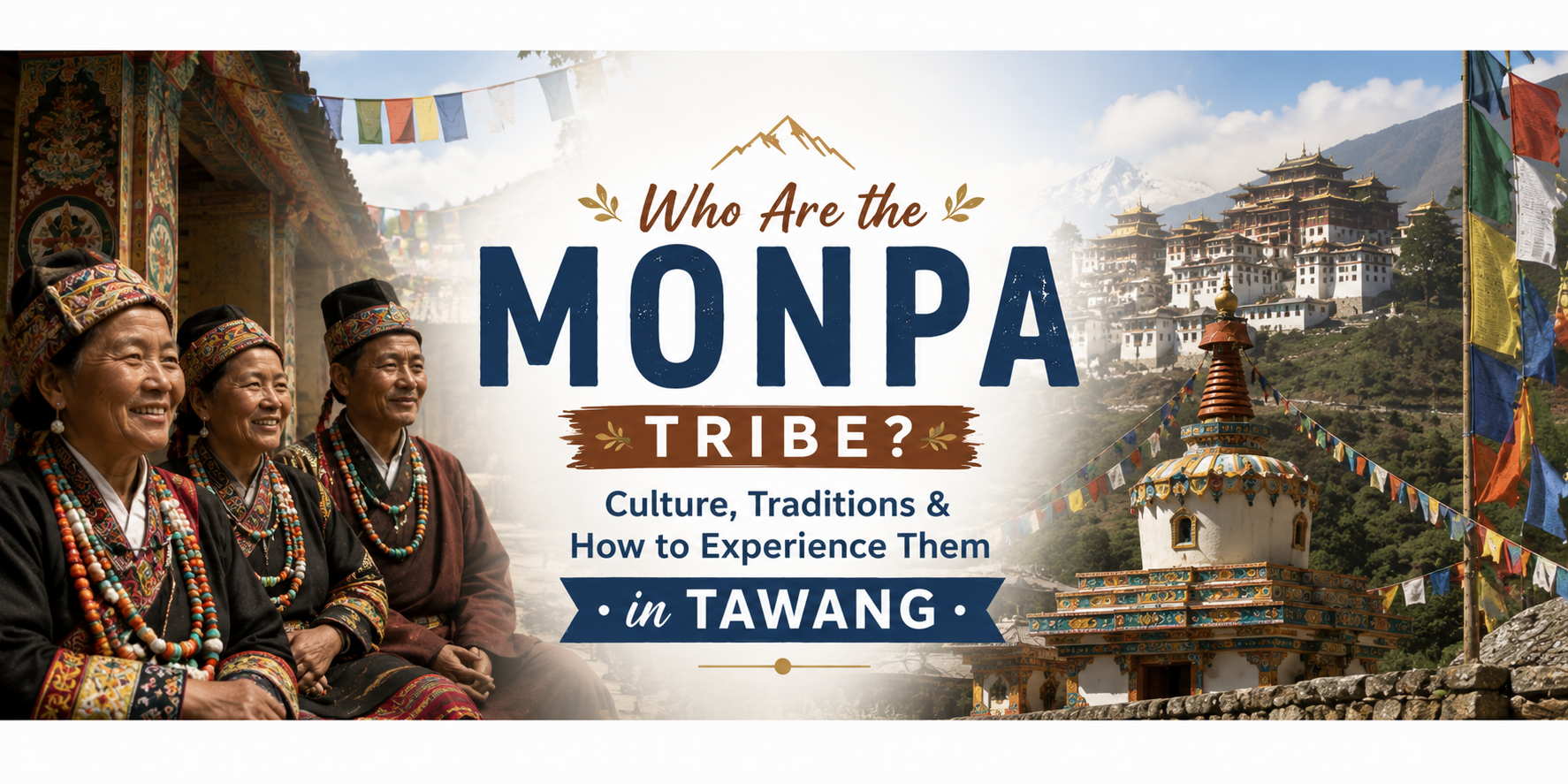
Long before Tawang became a popular travel destination, it was, and still is, home to the Monpa people. Walk through any village in this Himalayan region and you will find their presence woven into the prayer flags, the wooden monastery carvings, and the warm hospitality offered in every homestay. If you are planning a trip to Tawang, understanding the Monpa tribe will completely change how you experience the place. This guide covers who they are, what their culture looks like, and how you can respectfully experience their traditions firsthand.
Who Are the Monpa Tribe?
The Monpa are one of the major indigenous communities of Arunachal Pradesh, and they form the cultural backbone of the Tawang region. According to historical accounts, the Monpas have called Tawang their ancestral home since around 500 BC, making them one of the oldest established communities in the Eastern Himalayas. They are concentrated mainly in the Tawang and West Kameng districts, where they make up the vast majority of the local population. In Tawang district alone, the Monpa community accounts for nearly 97 percent of residents.
The Monpa are believed to be the only nomadic tribe in Northeast India, with many families historically depending on yaks, sheep, cows, goats, and horses for their livelihood. Their language belongs to the Tibeto-Burman family and is divided into several dialects depending on the sub-region. While agriculture and animal husbandry remain central to daily life, the Monpa identity is most deeply expressed through their devotion to Himalayan Buddhism.
Religion and Spiritual Life
Buddhism sits at the very heart of Monpa culture. Most Monpas follow the Gelug sect of Tibetan Buddhism, a tradition adopted in the seventeenth century under the influence of a Bhutanese-educated lama. This is the same sect followed at the Tawang Monastery, which remains the spiritual center of daily Monpa life even today. In a few areas, such as Zemithang, the Monpa instead follow the Nyingmapa tradition of Mahayana Buddhism.
Monasteries are not just religious buildings here. They function as schools, community centres, and cultural archives. Many young Monpa boys still train as monks, learning scripture, chanting, and traditional rituals passed down through generations.
Monpa Arts, Crafts, and Daily Life
The Monpa people are skilled artisans, known for wood carving, thangka painting, carpet weaving, and bamboo craft. One of their most distinctive traditions is papermaking, using pulp extracted from the local sukso tree. This handmade paper has historically been used to print Buddhist scriptures, and a printing press inside Tawang Monastery still produces religious texts using traditional wooden blocks.
Daily Monpa meals reflect both their Tibetan roots and their mountain environment. Staples include thukpa, a warming noodle soup, momos filled with meat or vegetables, and butter tea, a salty and rich beverage that helps combat the region's cold climate. During festivals, families also prepare khapse, a deep-fried traditional cookie.
Key Festivals of the Monpa Tribe
Festivals offer the most vivid window into Monpa culture, and timing your visit around one of these celebrations can transform your Tawang trip entirely.
Losar is the most important Monpa festival, marking the Tibetan New Year. It usually falls in February or March and can last up to fifteen days, though the first three days, known as Gyalpo Losar, hold the greatest significance. Families clean their homes, wear new clothes, visit the monastery for blessings, and exchange greetings with neighbors over shared meals. A unique local ritual called the Metho ceremony involves sacred chants and burning torches meant to ward off evil spirits and welcome good fortune.
Torgya is a three-day monastic festival held at Tawang Monastery, usually in January. Its highlight is the Cham, a sacred masked dance performed by monks in elaborate robes, accompanied by drums and cymbals, meant to drive away negative forces for the year ahead.
Choskar is a harvest festival during which villagers carry sacred scriptures around their fields, praying for a good harvest and protection from pests.
Saka Dawa honors the life of Gautama Buddha and is observed quietly through prayer and meditation across local monasteries.
How to Experience Monpa Culture in Tawang
The most meaningful way to understand Monpa life is to step beyond the main monastery circuit and engage directly with the community.
Stay in a local homestay rather than a standard hotel. Many Monpa families open their homes to travellers, offering home cooked meals, butter tea, and genuine conversation about their way of life.
Visit during Losar or Torgya if your travel dates allow it. These festivals are living traditions, not staged performances, and witnessing them respectfully offers an unmatched cultural experience.
Explore villages like Mukto, where artisans still make traditional paper by hand, or Bekhar village, which holds deep spiritual significance for the Monpa community.
Always ask before photographing rituals or individuals, remove your shoes before entering a monastery or home, and dress modestly. Learning a simple greeting like Tashi Delek goes a long way in building genuine connections with locals.
Frequently Asked Questions
Q1. Who are the Monpa tribe of Tawang?
The Monpa are an indigenous Buddhist community native to the Tawang and West Kameng districts in Arunachal Pradesh. They have inhabited the region since ancient times and form the majority population of the Tawang district.
Q2. What religion do the Monpa people follow?
Most Monpas follow the Gelug sect of Tibetan Buddhism, centered around the Tawang Monastery. Some communities, particularly in Zemithang, follow the Nyingmapa tradition instead.
Q3. What is the main festival of the Monpa tribe?
Losar, the Tibetan New Year, is the most important Monpa festival. It usually falls between February and March and involves prayers, family gatherings, and traditional rituals lasting up to fifteen days.
Q4. What language do the Monpa people speak?
The Monpa language belongs to the Tibeto-Burman family and has several distinct dialects depending on the sub-region within Tawang and West Kameng.
Q5. Can tourists visit a Monpa village or homestay?
Yes. Many Monpa families welcome travelers into homestays, offering an authentic glimpse into daily life, local food, and traditions. It is best to book through a trusted local operator for an immersive and respectful experience.
Q6. What food is associated with Monpa culture?
Common Monpa dishes include thukpa, momos, butter tea, and khapse, a fried cookie prepared especially during the Losar festival.
Q7. Is it respectful to attend Monpa festivals as an outsider?
Yes, visitors are generally welcome at festivals like Losar and Torgya. Travelers should dress modestly, ask permission before taking photographs, and follow guidance from locals or guides during rituals.
Experience Authentic Monpa Culture with Tribal Discovery Tours
Tawang's true magic lies in its people as much as its landscapes. At Tribal Discovery Tours, we design immersive journeys that connect travellers directly with Monpa villages, homestays, and festivals, going far beyond a typical sightseeing trip.
Let us help you experience Tawang the way it deserves to be seen, through the eyes and traditions of the Monpa community.
Plan your culturally immersive Tawang trip at tribaldiscoverytours.com