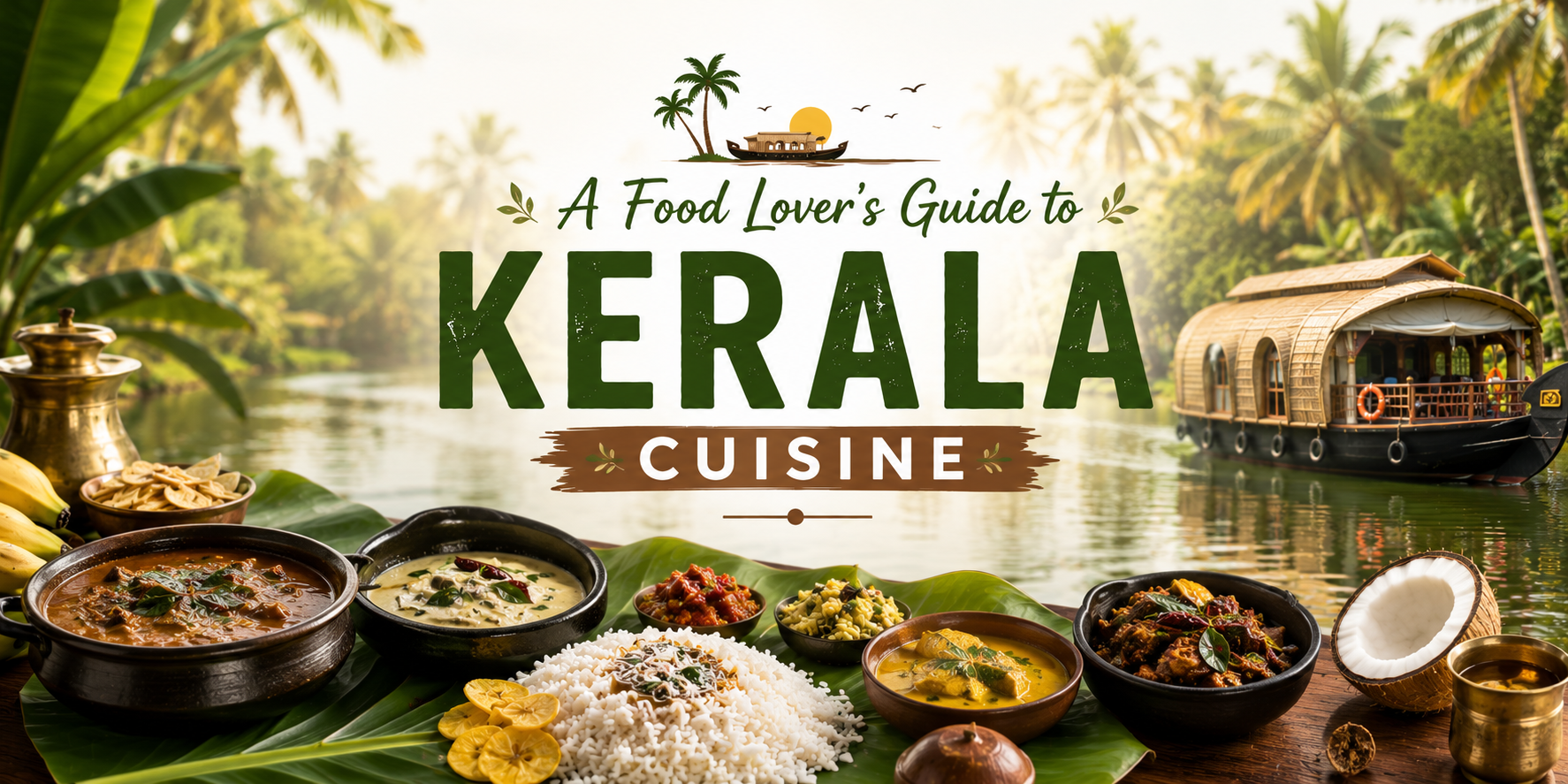

Kerala is often celebrated for its backwaters, hill stations, and spice plantations, but for many travelers, the real reason to visit is what ends up on the plate. Kerala cuisine is a culinary style native to the southwestern Malabar Coast, featuring both vegetarian and non-vegetarian dishes prepared with fish, poultry, and red meat, with rice as the typical accompaniment. Shaped by centuries of spice trade, three distinct religious communities, and an abundance of coconut, seafood, and rice, Kerala's food culture is as layered as the state's geography itself. This guide takes you through everything a true food lover needs to know: the iconic dishes, regional differences, festival feasts, and where to find the most authentic flavors.
Why Kerala Is Called the "Land of Spices"
Kerala earned its reputation as the Land of Spices through centuries of trade with Europe and ancient civilizations, with historical records dating back to the Sumerians around 3000 BCE. This deep trading history is precisely why Kerala's food carries flavors you won't find anywhere else in India. Spice traders from distant lands have visited Kerala since time immemorial, leaving behind cultural imprints that blended Arab, Portuguese, and British influences into the local cuisine.
Coconut grows in abundance across the state, so grated coconut and coconut milk are used extensively for thickening and flavoring dishes. Kerala's long coastline and numerous rivers have also fostered a strong fishing industry, making seafood a daily staple. Add to this the heavy use of black pepper, cardamom, clove, ginger, and cinnamon, and you get a cuisine that is fragrant, layered, and deeply rooted in the land itself.
The Three Culinary Traditions of Kerala
What makes Kerala cuisine so fascinating is that it isn't one single food culture; it's three, shaped by the state's major communities.
Hindu Cuisine: Kerala's Hindu community is traditionally vegetarian, though many today also eat chicken, meat, and seafood. This community contributes the cuisine's crowning jewel, the elaborate Sadya feast.
Malabar Muslim Cuisine: Centered in North Kerala, this tradition gave the world Malabar biryani and a rich variety of meat-based dishes, deeply influenced by Arab trading history.
Syrian Christian Cuisine: Kerala's Christian cuisine, especially among Saint Thomas Christians, is a blend of Indian, Middle Eastern, Syrian, Jewish, and Western cooking styles, with an elaborate variety of dishes prepared for feasts, rituals, and ceremonies.
Kerala Cuisine by Region
Northern Kerala, particularly Malabar, leans into bold spice and deep gravies, while Central Kerala carries Christian influences with stews and slow-cooked meat dishes. Southern Kerala feels lighter and more often vegetarian, letting coconut do the work. This regional variation means that traveling across Kerala is, in many ways, a moving food tour in itself.
The Sadya: Kerala's Grandest Feast
No guide to Kerala cuisine is complete without the Sadya, the state's iconic vegetarian feast. A full-course Sadya consists of rice with about 20 different accompaniments and desserts, traditionally served on a plantain leaf during celebratory occasions like weddings, Onam, and Vishu. Some elaborate versions go even further — a traditional Sadya can feature up to 28 individual dishes showcasing the full breadth of Kerala's vegetarian cooking.
The Sadya is widely considered the pinnacle of Kerala's culinary culture, with rice at the centre surrounded by sambar, rasam, parippu, avial, pachadi, pickles, and crisps like banana chips and papadam. The meal follows a precise order and etiquette — it is eaten with the right hand as a sign of respect, with diners typically seated cross-legged on the floor, and the feast traditionally concludes by folding the plantain leaf in half.
Must-Try Kerala Dishes
Appam and Stew: Soft, lacy rice pancakes with crispy edges, served alongside a mild coconut-based stew made with vegetables, chicken, or seafood.
Malabar Biryani (Thalassery Biryani): This iconic dish originated in Thalassery and uses fragrant Kaima rice, prepared as a dum biryani that has since spread across Kerala and beyond.
Puttu and Kadala Curry: Steamed cylinders of rice cake layered with grated coconut, paired with a spiced black chickpea curry. A breakfast staple found in nearly every Kerala home.
Avial: A medley of mixed vegetables cooked in a thick coconut and yoghurt gravy, lightly tempered with curry leaves and coconut oil. A non-negotiable part of any Sadya.
Fish Moilee: Fish gently cooked in a coconut milk gravy infused with turmeric, green chillies, and curry leaves, forming a smooth golden curry that is especially popular along the coastline.
Malabar Parotta with Beef Curry: A flaky, layered bread served with a rich, slow-cooked spicy beef curry — one of the most beloved combinations in North Kerala.
Karimeen Pollichathu: Pearl spot fish marinated in spices, wrapped in a banana leaf, and pan-seared to smoky perfection. A backwater specialty not to be missed.
Payasam: A rice-based milk pudding made with jaggery, coconut milk, and cashews, served as the sweet finale to nearly every festive Kerala meal.
Where to Eat Authentic Kerala Food
If you want the real, unfiltered experience of Kerala cuisine, seek out these legendary spots:
Paragon Restaurant in Kozhikode and Kochi is famous for its Malabar biryani, seafood, and classic Kerala meals — a must-visit for genuine flavor-seekers. Hotel Malabar in Kozhikode is known as one of the most affordable eateries for a full-plate Kerala meal, ideal for travelers who want authenticity without spending much. For Malabar specialties like duck roast and pathiri, head to traditional cafés in Kozhikode and Thalassery, while Fort Kochi and Kottayam remain strongholds for Syrian Christian classics like fish moilee and meen vevichathu.
For an immersive deep dive, consider joining a local food trail, the Kochi Food Tasting Trail offers a two-hour guided walk sampling regional favorites, while the Malabar Coast Food Tour is a 12-day immersive journey featuring hands-on cooking sessions.
Best Time to Experience Kerala's Food Culture
While Kerala's cuisine is enjoyed year-round, festival season brings it to life in the most spectacular way. Onam, Kerala's biggest harvest festival, celebrates the legendary homecoming of King Mahabali with a lavish Sadya feast that represents the very essence of authentic Kerala cuisine. Visiting during Onam (typically August–September) or during temple festivals like Thrissur Pooram gives travelers a front-row seat to the state's culinary heart, with hundreds of food stalls serving everything from traditional sweets to spicy local classics.
Dietary Notes for Travelling Foodies
Kerala cuisine is remarkably accommodating for travelers with dietary preferences. Popular gluten-free choices include soft appams paired with vegetable curries, along with classic dishes like thoran and olan, wholesome, plant-based, and naturally gluten-free. For vegans, fresh tender coconut water, comforting olan, and refreshing pachadi are popular favorites, and most dishes can easily be adapted by asking chefs to skip ghee, milk, or curd.
Frequently Asked Questions (FAQs)
Q1. What is the most famous dish in Kerala?
The Sadya is widely regarded as Kerala's most iconic culinary experience, a vegetarian feast of up to 28 dishes served on a banana leaf during festivals like Onam and Vishu. For non-vegetarian travelers, Malabar biryani is equally celebrated.
Q2. Is Kerala food very spicy?
It varies by region. Malabar (North Kerala) cuisine tends to be bold and spicy with rich gravies, while South Kerala leans toward lighter, milder, coconut-based vegetarian dishes. Central Kerala falls somewhere in between, with slow-cooked stews.
Q3. What is Sadya and when is it served?
Sadya is a traditional vegetarian feast served on a banana leaf, consisting of rice and around 20 to 28 accompaniments including sambar, avial, thoran, payasam, and pickles. It is traditionally served during Onam, Vishu, weddings, and other celebratory occasions.
Q4. What should vegetarians try in Kerala?
Vegetarian travelers should try the Sadya feast, along with standalone dishes like avial, olan, thoran, kadala curry, puttu, appam, and payasam. Most of these are coconut-based, plant-forward, and full of flavour.
Q5. Where can I find the most authentic Kerala food?
Kozhikode and Thalassery are best for Malabar specialties like biryani and duck roast. Fort Kochi and Kottayam are ideal for Syrian Christian dishes like fish moilee. Local home-style restaurants ("meals" joints) across the state offer the most authentic everyday Kerala thali experience.
Q6. What is Malabar biryani and how is it different from other biryanis?
Malabar biryani, also called Thalassery biryani, uses short-grain Kaima rice instead of the long-grain basmati used in most Indian biryanis. It is prepared as a dum biryani and carries strong Arab culinary influences from historic Malabar Coast trade.
Q7. Is Kerala cuisine suitable for vegan and gluten-free diets?
Yes. Many traditional dishes like olan, pachadi, thoran, and appam with vegetable curry are naturally vegan-friendly or easily adaptable. Coconut-based dishes are often gluten-free, making Kerala cuisine one of the more accommodating regional cuisines in India.
Q8. What is the best time to visit Kerala for a food experience?
The Onam festival season (August–September) offers the most immersive food experience, with elaborate Sadya feasts across the state. Temple festivals like Thrissur Pooram also showcase hundreds of local food stalls year-round.
Taste Kerala the Authentic Way with Tribal Discovery Tours
Reading about Kerala's flavors is one thing; tasting them straight from a banana leaf in a backwater village or a century-old Kozhikode kitchen is an entirely different experience. At Tribal Discovery Tours, we craft immersive, culturally rich travel experiences across India that go beyond sightseeing, connecting you with authentic local food, traditions, and communities wherever you travel.
Whether you're dreaming of a Kerala food trail or an offbeat cultural journey through India's hidden corners, we design every trip around real, local experiences.
Explore Curated Food & Culture Tours: tribaldiscoverytours.com
Come hungry. Leave with stories and a few new favorite dishes.