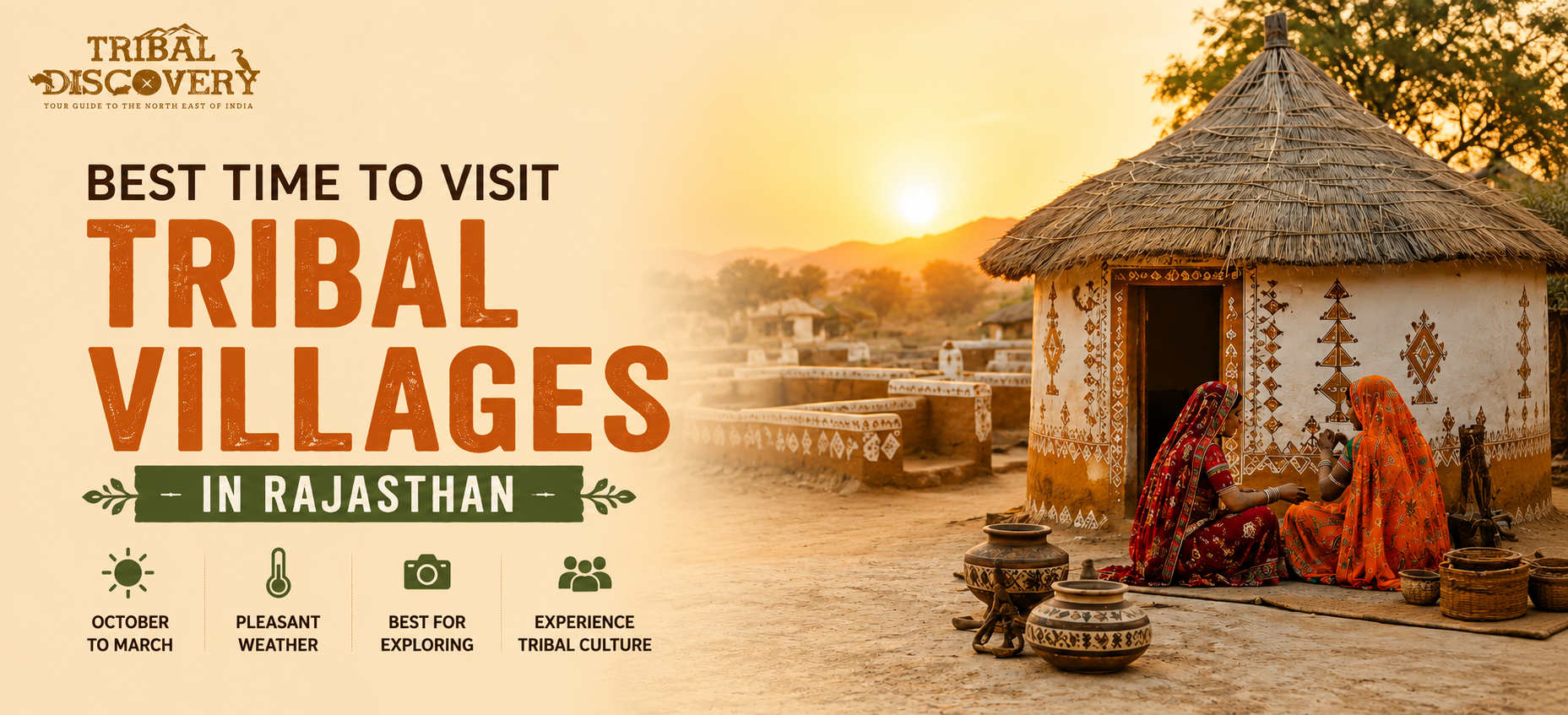
Rajasthan is a state of many layers. Most travellers see the palaces, the deserts, and the forts, but beneath all of it lies a living, breathing tribal world that predates every monument by centuries. The Bhil, Meena, Garasia, Rabari, and Sahariya communities have shaped the state's music, craft, dance, and spiritual life in ways that most visitors never discover. Knowing when to visit their villages makes all the difference between witnessing a quiet afternoon and arriving in the middle of a festival that fills the valley with colour, song, and ceremony.
This month-by-month guide helps you plan your tribal village visit around the best weather, the most significant cultural events, and the most rewarding on-the-ground experiences Rajasthan has to offer.
Meet the Major Tribes of Rajasthan
Before diving into the seasonal breakdown, it helps to know who you will be visiting and where.
The Bhil are the largest tribe in Rajasthan and one of the oldest in India, with references to the community found in both the Ramayana and Mahabharata. They are concentrated in the Banswara, Dungarpur, and Udaipur districts and are celebrated for their Ghoomar dance, wall paintings, and archery traditions. The Meena are the most populous and socially advanced tribal community in the state, primarily settled across Jaipur, Dausa, and Sawai Madhopur. The Garasia inhabit the hilly terrain near Abu Road in Sirohi, Pali, and parts of Udaipur, living in tight-knit village units called phaliyas. The Rabari are nomadic cattle and camel herders known for their stunning mirror embroidery and white-washed mud sculpture work. The Sahariya, meaning companion of the forest, are the most isolated and vulnerable tribal group in the state, found in the Baran district's forested areas.
Month-by-Month Guide to Visiting Tribal Villages in Rajasthan
January: Cool Days, Festive Energy
January is one of the most comfortable months for travel across Rajasthan. Temperatures in tribal belt areas like Banswara and Udaipur hover between 8°C and 22°C, making it ideal for village walks, outdoor markets, and rural exploration. The Baneshwar Fair, the single most important festival for the Bhil community, typically falls in January or February at the confluence of the Som, Mahi, and Jhakad rivers in Dungarpur. Often described as the Kumbh Mela of tribal Rajasthan, this gathering draws tens of thousands of Bhil families for prayer, trade, Ghoomar performances, acrobatics, and folk music. If your travel dates allow one festival in this region, Baneshwar should be it.
February: The Baneshwar Peak and Pre-Summer Beauty
February continues the ideal weather window and often coincides with the peak of the Baneshwar Fair. The countryside around Dungarpur and Banswara is dry but green enough to be attractive, and the festival atmosphere extends into the surrounding villages for several days. It is also a good month to visit Garasia villages near Abu Road, where the cool evenings and comfortable daytime temperatures make long village walks enjoyable without the strain of summer heat.
March: Holi and the Bhil Sawang Tradition
March brings one of the most visually spectacular experiences in tribal Rajasthan. The Bhil community celebrates Holi with an energy that goes far beyond the festival as most of India knows it. A traditional folk performance called Sawang, a form of dance-drama lasting several days, is performed during this period, with villagers narrating myths, legends, and local social satire through music and theatre. March is also when the Garasia community gathers for the Gangaur Fair in Gogunda and surrounding villages in Udaipur district, a celebration tied to marital happiness and the goddess Gauri. Temperatures start climbing toward the end of the month, so the first two weeks offer the most comfortable travel conditions.
April: Last Window Before Summer
April is the final comfortable month before the desert heat takes over. Cultural activity in tribal villages continues from the momentum of March festivals, and travellers who visit early in April can still find pleasant mornings and evenings in the Aravalli hill areas like Kumbhalgarh and Jawai, where Bhil and Garasia communities are accessible. The Garasia village near Jawai Dam, not far from Bera, is worth visiting this month since the wildlife activity around the dam also peaks, allowing travellers to combine a leopard safari with a tribal village experience.
May and June: Best Avoided for Village Travel
May and June are the harshest months across Rajasthan, with temperatures regularly crossing 40°C to 45°C in the plains and tribal belt areas. Village life slows significantly, outdoor activities become uncomfortable, and the experience is considerably diminished compared to cooler months. Only the higher Aravalli areas near Mount Abu offer any relief, where temperatures remain more moderate. Unless you are specifically targeting Mount Abu's Garasia settlements, these months are best avoided for tribal village tourism.
July: Monsoon Arrives, Dree-Style Celebrations Begin
July marks the arrival of the monsoon, and it transforms the tribal landscape dramatically. The hills around Udaipur, Sirohi, and Dungarpur turn a vivid green, rivers fill up, and the countryside comes alive with a freshness that the dry summer months erase. This month also marks the Dree-equivalent agricultural celebrations among communities praying for a good harvest. While Rajasthan's tribes do not celebrate Dree in the Apatani sense, July brings parallel harvest prayer gatherings across Bhil and Garasia villages tied to the agricultural calendar. Roads can be muddy and occasionally difficult, so a four-wheel drive vehicle and a local guide are strongly recommended for village visits this month.
August: Gavri Festival of the Bhil Tribe
August is one of the most culturally significant months for the Bhil community. A few days after Raksha Bandhan, the Gavri festival begins across villages in the Mewar region of Udaipur. Gavri is a 40-day cycle of ritual folk performances unique to the Bhil tribe, involving sacred dance-drama, devotional theatre, and community storytelling rooted in ancient mythology. Troupes move spontaneously from village to village without fixed announcements, making every performance feel genuinely organic and unscripted. This is one of the most under-visited cultural spectacles in Rajasthan and offers a rare window into the spiritual interior of Bhil life. Visiting during August requires flexibility, a local contact or guide, and a willingness to follow the festival wherever it leads.
September: Gavri Continues, Monsoon Tapers
September sees the Gavri festival continuing into its final weeks, and the monsoon begins to taper off by mid-month. The landscape remains lush, and the weather becomes progressively more comfortable as the weeks pass. Road conditions improve significantly after mid-September, making this a transitional month that offers the tail end of the monsoon greenery alongside returning accessibility to remote villages. Late September is an excellent time to visit if you want to witness Gavri without the peak monsoon disruption.
October: Ideal Month for the Garasia Highlands
October is a golden month for tribal village tourism across Rajasthan. The monsoon is fully gone, the countryside remains green from recent rains, temperatures settle into a comfortable 20°C to 32°C range, and roads are in excellent condition. The Garasia villages near Abu Road, Sirohi, and Jawai are particularly rewarding this month. Travellers can explore the phaliyas, interact with families, observe traditional weaving and tattooing customs among older community members, and attend any local fairs or harvest celebrations that communities organise at the end of the agricultural season.
November: Festival Season Peaks Across the State
November is arguably the most complete month for tribal tourism in Rajasthan. The weather is ideal, festivals begin picking up momentum ahead of winter, and the artisan activity in tribal villages reaches its peak as communities prepare craft items for winter fairs and trade gatherings. Meena tribal areas in Jaipur, Dausa, and Sawai Madhopur see increased community activity tied to Devuthni Ekadashi celebrations. This is also a good month to visit Rabari nomadic camps along traditional herding routes in the western and central parts of the state, where the cooler temperatures make their movement patterns more predictable.
December: Perfect Winter Travel, Tribal Craft Markets
December delivers the most comfortable travel weather of the year, with cool days and cold nights across most of Rajasthan. Tribal craft markets and winter fairs begin to dot the landscape, and many communities near Udaipur, Banswara, and Dungarpur prepare for the approaching Baneshwar Fair cycle. December is also an excellent month to visit Bhil villages near Kumbhalgarh, where the combination of fort visits, wildlife, and tribal culture creates one of the most well-rounded experiences available anywhere in Rajasthan. The mornings and evenings are especially rewarding, with a chill in the air that gives the landscape a quiet, contemplative quality.
Essential Tips for Visiting Tribal Villages in Rajasthan
Always hire a knowledgeable local guide who has existing relationships with the communities you plan to visit. A guide does more than translate; they open doors that simply remain closed to unaccompanied tourists. Dress modestly and conservatively, especially in religious or ritual settings. Ask permission before taking photographs of community members, their homes, or any ongoing ceremonies. Buying handmade craft items directly from artisans is one of the most respectful and impactful ways to support tribal communities without creating dependency on external organisations. Learn even a few words of greeting in Hindi, since warmth is universally understood.
Frequently Asked Questions
Q1. What is the best time to visit tribal villages in Rajasthan?
October to March is the best overall window, combining comfortable weather, accessible roads, and the most significant tribal festivals. January to February is especially rewarding for the Baneshwar Fair, while August and September offer the rare Gavri festival experience.
Q2. Which tribal communities can I visit in Rajasthan?
The major tribes accessible to visitors include the Bhil in Banswara, Dungarpur, and Udaipur; the Garasia near Sirohi, Pali, and Abu Road; the Meena in Jaipur and Dausa; and the Rabari nomadic communities across the western and central parts of the state.
Q3. What is the Baneshwar Fair, and when does it take place?
The Baneshwar Fair is the most important festival of the Bhil community, held at the confluence of the Som, Mahi, and Jhakad rivers in Dungarpur, typically in January or February. It combines religious devotion with tribal trade, folk music, Ghoomar dance, and acrobatics, drawing tens of thousands of visitors annually.
Q4. What is the Gavri festival of the Bhil tribe?
Gavri is a 40-day cycle of sacred folk performances observed by the Bhil community in the Mewar region of Udaipur, beginning a few days after Raksha Bandhan in August. It involves ritual dance-drama, devotional theatre, and community storytelling that moves spontaneously from village to village.
Q5. Is it respectful for tourists to visit tribal villages in Rajasthan?
Yes, as long as visits are conducted with sensitivity and local guidance. Hiring a local guide, dressing modestly, asking before photographing, and supporting community artisans directly are the key principles of respectful tribal tourism.
Q6. Which month is best for Garasia village visits?
October and November are ideal for visiting Garasia villages near Jawai, Abu Road, and Sirohi, when the weather is comfortable, the landscape is post-monsoon green, and community life is actively visible.
Q7. Do I need a permit to visit tribal villages in Rajasthan?
No special permit is required for visiting tribal villages in Rajasthan since it is an open state. However, visiting with a registered local guide and coordinating with a trusted tour operator ensures both access and respect for community boundaries.
Q8. What crafts and traditions should I look out for during a tribal village visit?
Look for Bhil wall paintings and Ghoomar performances; Garasia woven textiles and tattoo traditions among older women, Rabari mirror embroidery and mud sculpture work; and Meena agricultural craft and jewellery. Each community has a distinct craft identity that reflects its history and relationship with the land.
Discover Tribal Rajasthan with Tribal Discovery Tours
Tribal Rajasthan is not a destination you can experience meaningfully from a tour bus window. It requires time, trust, and the guidance of someone who already knows and respects these communities. At Tribal Discovery Tours, we specialise in building genuine, immersive connections between travellers and the tribal worlds of India, including the Bhil, Garasia, Rabari, and Meena communities of Rajasthan.
Whether you want to witness the Baneshwar Fair firsthand, walk through a Garasia phaliya at sunrise, or spend an evening listening to Bhil folk music around an open fire, we design every journey around experiences that are authentic, respectful, and unforgettable.
Explore Our Rajasthan Tribal Village Tour
The real Rajasthan is waiting. Let us take you there.